
If you own a metal roof, understanding the true scope of metal roof repair can save you thousands of dollars and years of headaches. Metal roofs are built to last 40 to 70 years according to the Metal Roofing Alliance, but even the most durable systems face specific vulnerabilities in Illinois, where freeze-thaw cycles, hailstorms, and heavy spring rains put every roofing material through a relentless seasonal gauntlet. Homeowners in Bolingbrook and surrounding areas know this better than most.
Here is what you will learn in this guide:
- Common problems: The six most frequent metal roof failures Illinois homeowners encounter, from fastener back-out to panel corrosion.
- Real repair costs: Honest price ranges for each type of repair so you can budget confidently before calling a contractor.
- When to act: How to tell the difference between a minor fix and a sign that your system needs deeper attention from a licensed roofing professional.
Why Metal Roofs in Illinois Face Unique Repair Challenges
Illinois weather does not play favorites. The combination of hot summers, subzero winters, and severe spring storm seasons creates conditions that stress metal roofing systems in ways that homeowners in milder climates rarely encounter. Understanding these environmental pressures is the first step toward protecting your investment.
Metal expands and contracts with temperature changes, a property known as thermal movement. In Illinois, temperatures can swing more than 100 degrees Fahrenheit between summer highs and winter lows, which means your metal roof panels are constantly in motion. Over time, this movement stresses fasteners, seams, and sealants, creating entry points for water.
How Does Illinois Climate Damage Metal Roofs?
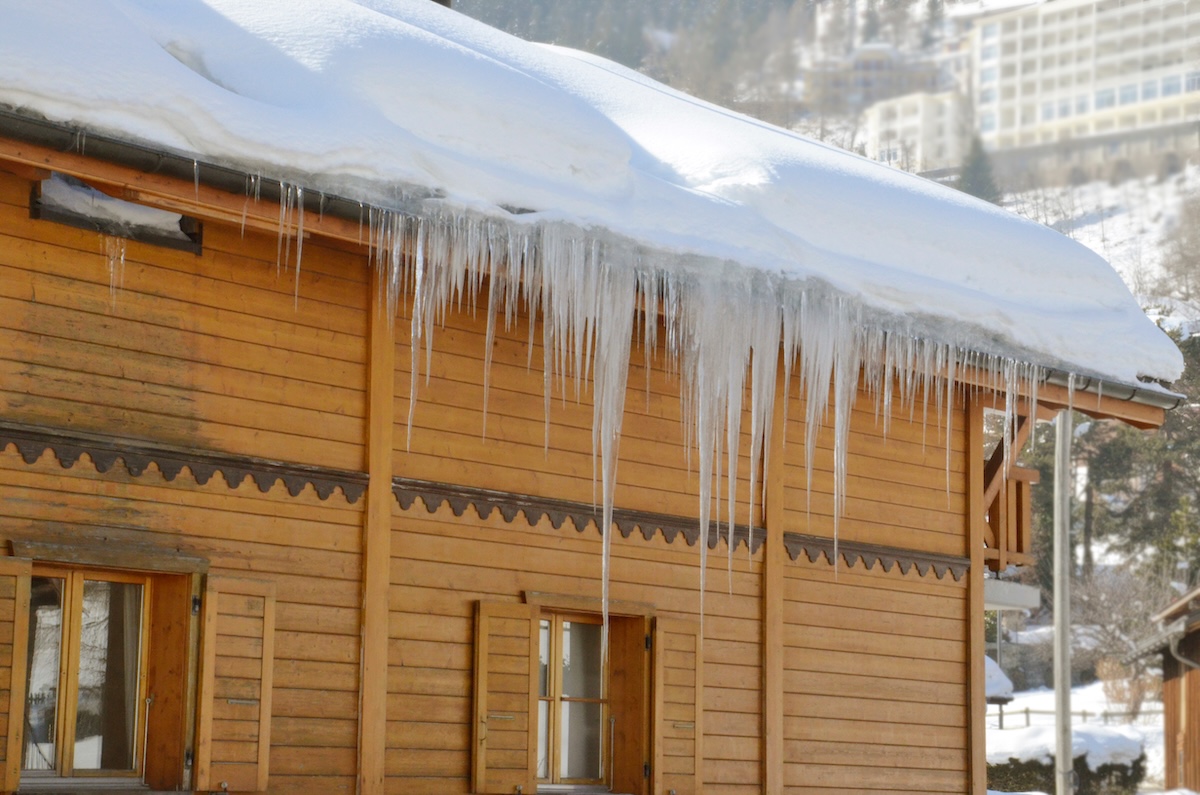
Illinois sits in a region where freeze-thaw cycles occur dozens of times per winter season. Water that infiltrates even a hairline gap in a seam or around a fastener will expand as it freezes, widening that gap with each cycle. Over several seasons, small imperfections become legitimate leaks. Hailstorms, which are common across the Chicago metro corridor including Bolingbrook and surrounding areas, can dent panels, crack coatings, and compromise the watertight integrity of standing seam systems. Spring flooding and ice damming round out a full year of mechanical and moisture stress that no roofing material faces without at least some maintenance requirements.
- Thermal movement: Steel and aluminum panels expand and contract with every temperature shift, placing cyclic stress on fasteners and lap joints throughout the year.
- Freeze-thaw infiltration: Water trapped in micro-gaps freezes, expands, and physically forces open seams, flashing connections, and penetration points over time.
- Hail impact: Illinois averages significant hail events each spring, and even small hailstones can scratch protective coatings on Galvalume and painted steel panels, accelerating surface corrosion.
- Ice dams: Inadequate attic ventilation combined with snow accumulation creates ice dams at eave edges that force water back under panel laps and into the building envelope.
6 Common Metal Roof Problems and What They Cost to Fix
The six problems below account for the vast majority of metal roof repair calls Lifetime Restoration receives from homeowners in Bolingbrook and surrounding areas. Each section covers what causes the problem, how to spot it early, and the realistic cost range you should expect to pay a licensed contractor for the repair.
1. Fastener Back-Out and Washer Failure
Fastener back-out is the most common problem on screw-down metal panel systems, and it is one of the most underdiagnosed sources of leaks in the Illinois market. As metal panels expand and contract with seasonal temperature changes, the screws that hold them to the deck rotate slightly with each cycle. Over years, this rotational movement works screws loose from their original bite in the substrate. When a screw backs out even a fraction of an inch, the rubber or neoprene washer beneath the head can no longer compress and seal properly, and water infiltration begins. Worse, UV exposure causes washers to harden and crack independent of screw movement, meaning even tight fasteners can fail on older systems. A thorough inspection of a screw-down panel roof should examine every visible fastener for signs of back-out, missing screws, cracked washers, or rust bleed-through on the panel surface.
- Cost to repair: $300–$900 for spot re-fastening and washer replacement on a standard residential roof, depending on the number of fasteners and roof accessibility.
- DIY risk: High. Improperly torqued replacement screws can crack new washers or strip the deck, creating a larger problem than the original.
- Signs to watch for: Rust streaks running down from screw heads, visible gaps between the screw head and the panel surface, and interior water stains near the roof field rather than at walls or penetrations.
- Illinois factor: The high thermal swing in the Chicago suburbs accelerates fastener back-out compared to warmer climates, making annual inspections especially important on screw-down systems older than 10 years.
2. Seam Failure on Standing Seam Systems
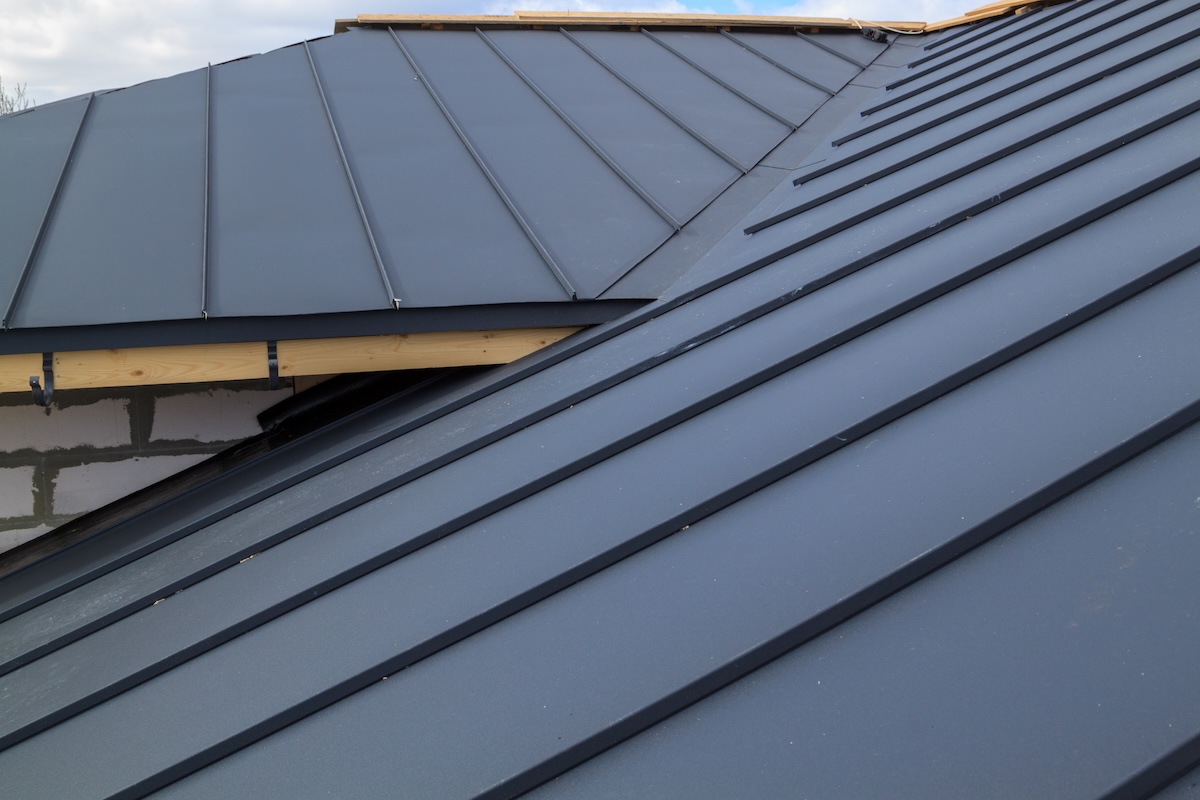
Standing seam metal roofs use mechanically locked or snap-lock seams running vertically up the roof slope, which is a design intended to eliminate fastener penetrations through the panel face. When those seams fail, the consequences are significant because a compromised seam runs the full length of the panel, potentially allowing water entry across a wide strip of the roof. Seam failures typically result from improper installation where panels were not fully locked, from physical damage such as a contractor walking on the seam and depressing it, or from the gradual fatigue of clip systems that are undersized for the thermal movement range on a given building. In Bolingbrook and surrounding areas, standing seam systems on commercial and residential buildings alike should be walked by a trained inspector every two to three years to check seam integrity at eave ends, ridge caps, and hip transitions.
- Cost to repair: $500–$2,500 depending on the length of the compromised seam, the panel profile, and whether the underlying substrate was damaged by water infiltration before the repair.
- Replacement vs. repair: A seam failure in isolation is repairable, but if the water damage has rotted the underlying deck sheathing, the repair scope expands substantially.
- Signs to watch for: Lifted seam flanges visible from the ground, water stains on interior ceilings that track in a straight line parallel to the roof slope, and daylight visible through the attic at the seam line.
- Professional requirement: Standing seam seam repairs require a contractor familiar with the specific panel profile, as forcing an incompatible tool into a lock seam can cause irreparable damage to adjacent panels.
3. Flashing Failures at Penetrations and Transitions
Flashing is the system of metal strips, collars, and step pieces used to waterproof the joints between your roof panels and every penetration or transition on the roof surface, including chimneys, skylights, pipe boots, HVAC curbs, walls, valleys, and ridge caps. Flashing failures account for a disproportionate share of roof leak calls because these are the points where two different materials or planes meet, and no sealant or mechanical connection lasts forever. On metal roofs, the problem is compounded by the fact that the flashing itself is a metal component undergoing its own thermal movement, which may or may not be compatible with the movement rate of the primary roof panels. Mismatched metals can also cause galvanic corrosion at the contact point, which silently destroys flashing from the inside out over several years.
- Cost to repair: $200–$1,200 per penetration depending on complexity, the size of the penetration, and whether galvanic corrosion has spread to surrounding panels.
- Most common locations: Pipe boots are the single most frequent flashing failure point on residential metal roofs, followed by chimney step flashing and HVAC curb corners.
- Sealant vs. full replacement: Sealant-only repairs on failed flashing are a short-term fix. A properly flashed penetration requires correctly formed metal that overlaps into the panel field and drains water away from the opening.
- Insurance relevance: Flashing failures caused by hail or wind that dislodges step flashing may qualify as storm damage claims. Lifetime Restoration’s licensed public adjuster can evaluate whether your situation warrants filing with your insurance carrier.
4. Panel Corrosion and Coating Breakdown
Modern metal roofing panels use protective coatings, including Galvalume zinc-aluminum alloy coatings and factory-applied paint systems, to prevent the steel substrate from oxidizing. When those coatings are scratched, abraded, or chemically attacked, the bare steel beneath begins to rust. On painted steel panels, hail impacts are a primary cause of coating failure because hailstones can chip paint and dent the panel, both of which expose raw metal. On Galvalume panels, cut edges at valleys and rakes are a common corrosion starting point because the alloy coating does not self-heal at cut edges the way aluminum sometimes does. The National Roofing Contractors Association estimates that up to 40 percent of roofing issues stem from improper installation, and cut-edge corrosion is one of the most common installation-related failures seen on metal panels in the Illinois market.
- Cost to repair: $400–$1,800 depending on the extent of corrosion, whether panels must be replaced or can be treated, and the accessibility of affected areas.
- Treatment options: Rust-inhibiting primers and elastomeric roof coatings can stabilize surface corrosion on panels that retain structural integrity, extending service life by 10 to 15 years in some cases.
- Panel replacement: When corrosion has perforated a panel or compromised the structural rib, spot panel replacement is the correct repair and requires sourcing a matching profile, which may be difficult on discontinued product lines.
- Preventive maintenance: Keeping gutters clear reduces standing water contact at eave edges, which is one of the most corrosion-prone zones on any metal panel system.
5. Sealant Degradation at Laps and Penetrations
Butyl tape, urethane caulk, and silicone sealants are used at dozens of locations on every metal roof installation, including at panel laps, trim terminations, pipe collars, and skylight frames. All of these sealants have finite service lives. Exposed urethane and silicone sealants typically last 10 to 20 years depending on UV exposure, thermal cycling, and application quality, but in Illinois, the combination of intense summer UV and the mechanical stress of thermal movement can shorten that lifespan considerably. When a sealant fails, it often does so invisibly, shrinking away from the metal surface it was meant to seal and leaving a gap that looks sealed from the outside but allows wind-driven water to penetrate. Homeowners in Bolingbrook and surrounding areas who have not had their metal roof inspected in the past five years should prioritize a sealant audit as part of their next inspection.
- Cost to repair: $150–$600 for sealant replacement at standard penetration and lap locations on a typical residential metal roof.
- Sealant selection: Not all sealants are compatible with all metal coatings. Using an incompatible product can accelerate coating breakdown at the application zone, requiring additional repair later.
- Inspection frequency: Sealant at pipe boots and ridge cap terminations should be visually inspected every three to five years, with re-application as needed before cracking or separation is evident.
- Insurance note: Sealant degradation from normal aging is generally a maintenance item, not an insurance claim. However, if a storm event caused mechanical separation of a previously intact sealant joint, documentation from a licensed adjuster may support a claim.
6. Oil Canning and Panel Distortion
Oil canning refers to the visible waviness or rippling that appears in the flat field of a metal panel, a phenomenon caused by stress in the metal that was either introduced during manufacturing, created by improper installation, or developed as a result of structural movement in the underlying deck. While oil canning is primarily an aesthetic condition and does not by itself indicate a leak, significant panel distortion can signal substrate movement or settling that may eventually compromise seams and fasteners. On screw-down systems, panels that were over-fastened or fastened with insufficient thermal expansion gaps can buckle visibly as the metal tries to expand in summer heat. On standing seam systems, inadequate clip spacing can produce similar buckling patterns. Homeowners sometimes mistake moderate oil canning for storm damage, and while true hail denting is distinct from thermal buckling, a trained inspector can document both accurately.
- Cost to address: $0 for cosmetic oil canning with no functional consequence, up to $1,500–$3,000 if panel replacement or re-fastening is required to eliminate stress-induced distortion.
- Distinguishing hail damage: True hail dents have a characteristic circular depression with a clear perimeter edge, while oil canning produces broad, gradual waves without defined impact points.
- Structural concern: If oil canning is accompanied by cracked paint or visible seam lifting, the cause may be deck movement rather than installation error, and a structural evaluation may be warranted.
- Documentation value: If your panel distortion followed a specific storm event, Lifetime Restoration’s licensed public adjuster can assess whether the distortion qualifies under your homeowner’s policy as covered storm damage.
How Much Does Metal Roof Repair Cost in Illinois?
Repair costs vary widely based on the type of damage, the system profile, and the contractor’s access to the roof, but having a realistic baseline helps homeowners evaluate estimates and avoid overpaying or underpaying for necessary work. The figures below reflect typical ranges for licensed contractor repairs in the greater Bolingbrook and surrounding areas market.
Most homeowners in Illinois pay between $300 and $2,500 for a single metal roof repair, with the national average for metal roof repairs landing around $1,700 due to the specialized labor required. Minor repairs involving sealant replacement or individual fastener correction fall at the lower end of that range, while seam failures or panel replacements that include deck repair can push well past $2,500 on complex or larger roofs.
What Factors Affect the Final Repair Cost?
Several variables move the needle significantly on metal roof repair quotes, and understanding them helps you ask the right questions when getting estimates.
- Roof pitch and height: Steeper roofs and multi-story buildings require additional safety equipment and crew time, typically adding 15 to 25 percent to labor costs on complex geometries.
- Panel profile availability: Discontinued panel profiles require sourcing matching stock, which can add material costs and lead time to what would otherwise be a straightforward panel replacement.
- Substrate damage: Water that has been infiltrating for months before discovery frequently damages roof deck sheathing and insulation, turning a simple surface repair into a carpentry and roofing combined scope.
- Emergency or seasonal timing: Winter repairs in Illinois carry a labor premium due to freezing conditions, and fall peak demand can push contractor availability out by several weeks in high-demand markets.
- Repair scope vs. replacement threshold: A metal roof that has multiple concurrent failure modes, including corroded panels, failed sealants, and backed-out fasteners across the whole field, may be more cost-effective to replace than to repair piecemeal.
Frequently Asked Questions About Metal Roof Repair in Illinois
How Much Does Metal Roof Repair Cost on Average?
Metal roof repair in Illinois typically costs between $300 and $2,500 for most residential jobs, with the average landing around $1,700 for a single repair scope. The specific problem type, the panel system, and the extent of any secondary damage to the deck or insulation determine where your repair falls in that range.
Can I DIY a Metal Roof Repair?
Most metal roof repairs should be handled by a licensed contractor. Improper fastener torque, incompatible sealants, and incorrect panel handling can void manufacturer warranties and create additional leak points. Small cosmetic touch-ups with manufacturer-approved touch-up paint are generally safe for homeowners, but any repair involving penetrations, seams, or fasteners warrants professional attention.
How Often Should a Metal Roof Be Inspected?
A metal roof should be professionally inspected at least once every three to five years, with additional inspections following any significant hail event or severe windstorm. Annual visual checks of accessible areas, gutters, and downspouts help catch developing problems between full inspections.
Will Homeowners Insurance Cover Metal Roof Repairs?
Homeowners insurance typically covers metal roof damage caused by a covered peril such as hail, wind, or falling debris. Normal wear, sealant degradation, and corrosion from deferred maintenance are generally excluded. Lifetime Restoration has a licensed public adjuster on staff to help homeowners document and file storm damage claims accurately.
Does a Metal Roof Need to Be Replaced or Just Repaired?
Most metal roof issues can be repaired if the damage is isolated and the panel system retains its structural integrity. Replacement becomes the better value when corrosion is widespread, multiple systems are failing simultaneously, or the cost of repairs exceeds 30 to 40 percent of a full replacement quote. A complimentary inspection from Lifetime Restoration will give you a clear answer for your specific roof.
How Long Does a Metal Roof Repair Take?
Most residential metal roof repairs are completed in one day. More complex repairs involving deck replacement, multiple panel sections, or custom-fabricated flashing components may extend to two to three days. Emergency tarping and temporary waterproofing can be applied the same day to stop active leaks while permanent repairs are scheduled.
Trust Lifetime Restoration for Metal Roof Repair in Bolingbrook and Beyond
When your metal roof needs attention, the contractor you choose matters as much as the repair itself. Lifetime Restoration serves homeowners throughout Bolingbrook and surrounding areas as a GAF Silver Pledge contractor, an Owens Corning Preferred contractor, and a Hardie-certified installer, which means our team meets the installation and service standards set by the industry’s leading manufacturers. We offer complimentary inspections so you never have to guess at the condition of your roof before committing to a repair scope. Our licensed public adjuster is available to help you evaluate whether storm damage qualifies for an insurance claim, and we offer financing options to make necessary repairs accessible regardless of your immediate budget.
Whether you are dealing with a leaking pipe boot, backed-out fasteners across a screw-down panel system, or a corrosion problem that has been progressing for years, Lifetime Restoration has the expertise and the manufacturer certifications to repair it correctly and back the work with the warranty coverage you deserve. Contact us today to schedule your complimentary roof inspection and get a clear, honest assessment of what your metal roof needs.